Absorption of Macronutrients
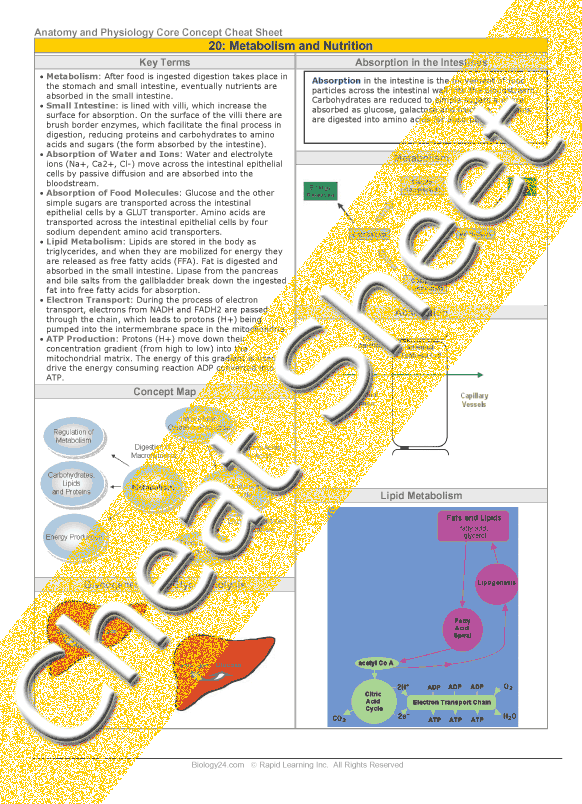
Absorption of water: Water and electrolyte ions (Na+, Ca2+, Cl-) move across the intestinal epithelial cells by passive diffusion and are absorbed into the bloodstream.
Absorption of nutrient molecules: Glucose and the other simple sugars are transported across the intestinal epithelial cells by a GLUT transporter. This is a sodium dependent transporter that binds sodium then glucose and transports them inside the cell. Amino acids are transported across the intestinal epithelial cells by four sodium dependent amino acid transporters.
Metabolism
Carbohydrate metabolism: As glucose and fructose are absorbed in the small intestine, they are first brought to the liver via the portal vein. Depending on the needs of the body, the liver will either store excess glucose as glycogen (glycogenesis) or breakdown glycogen to release glucose into the bloodstream (glycogenolysis).
Protein metabolism: Proteins are digested and absorbed as amino acids. Amino acids can be used inside cells to build proteins, or can be catabolized and used for producing energy.
Lipid metabolism: Lipids are stored in the body as triglycerides, and when they are mobilized for energy they are released as free fatty acids (FFA).
Energy Production
Glycolysis: Glycolysis is a pathway in which a molecule of glucose is oxidized into two molecules of pyruvic acid. Glycolysis takes place in the cytosol of the cell.
Citric Acid Cycle: The Citric Acid Cycle, also known as the Krebs Cycle, converts Acetyl CoA into NADH and FADH2, which are coenzymes that transfer electrons during the last step in energy production.
Oxidative phosphorylation: Nutrient molecules contain stored energy; enzymes perform oxidation-reduction reactions to facilitate the formation of adenosine triphosphate (ATP).
ATP production: During the process of electron transport, electrons from NADH and FADH2 are passed through the chain, which leads to protons (H+) being pumped into the intermembrane space in the mitochondria. The energy of the proton gradient is used to drive the energy consuming reaction ADP converted into ATP.
Regulation of Metabolism
Absorptive state: Absorptive state: during this state the majority of glucose absorbed from the gastrointestinal tract is converted to glycogen and triglycerides.
Postabsorptive state: the main goal of the body during this state is to maintain a normal blood sugar level. In order to do this, glucose is released from glycogen, and triglycerides are converted into free fatty acids. Glycerol is oxidized into energy, in the form of ATP.
Hormonal regulation of metabolism: The main hormones that regulate metabolism in the body are: (A) insulin (B) glucagon and (C) epinephrine.