(877) Rapid-10
Rapid Learning in 24 Hours
  Home Site Map Contact Us
Rapid Learning Member Login  
BBBOnline Seal
 How to Learn in 24 Hours?

 Need Help?
M-F: 9am-5pm(PST):
Toll-Free: (877) RAPID-10
US Direct: (714) 692-2900
Int'l: 001-714-692-2900


24/7 Technical Support:
The Rapid Support Center

Online Order with Instant Access:
Buy Now with Instant Access
 Got Questions?
Frequently Asked Questions
 Need Proof?
Reviews and Testimonials


 Quick Search:
Keywords: 
 

 Member Login:
User ID: 
Password: 
 

 Rapid Learning Catalog:

AP in 24 Hours

MCAT in 24 Hours (Medical)

DAT in 24 Hours (Dental)

OAT in 24 Hours (Optometry)

PCAT in 24 Hours (Pharmacy)

Nursing Entrance Exams

Chemistry in 24 Hours

Biology in 24 Hours

Physics in 24 Hours

Mathematics in 24 Hours

eBook - Survival Kits

Audiobooks (MP3)


 Tell-A-Friend:
Have friends taking science and math courses too? Tell them about our rapid learning system.

 Gift Certificate:

Send a gift of education to someone you care. Give the learning edge with our rapid learning courses.

Product Code
  • RL-700-GP Premium
  • RL-700-GS Standard
  • RL-700-GL Lite

FAIL (the browser should render some flash content, not this).

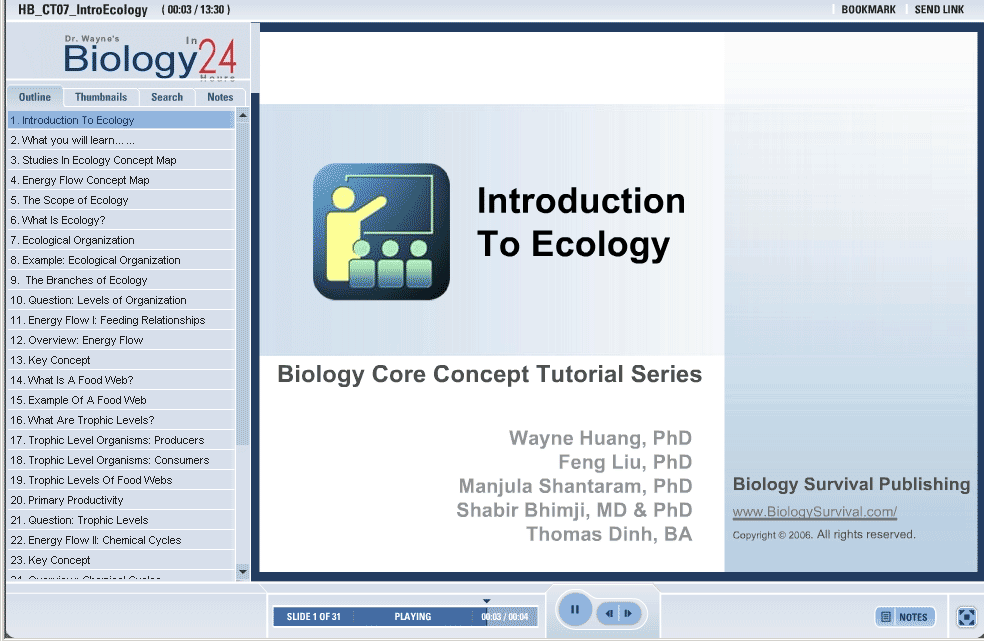
Introduction to Ecology

Topic Review on "Title":

Scope of Ecology
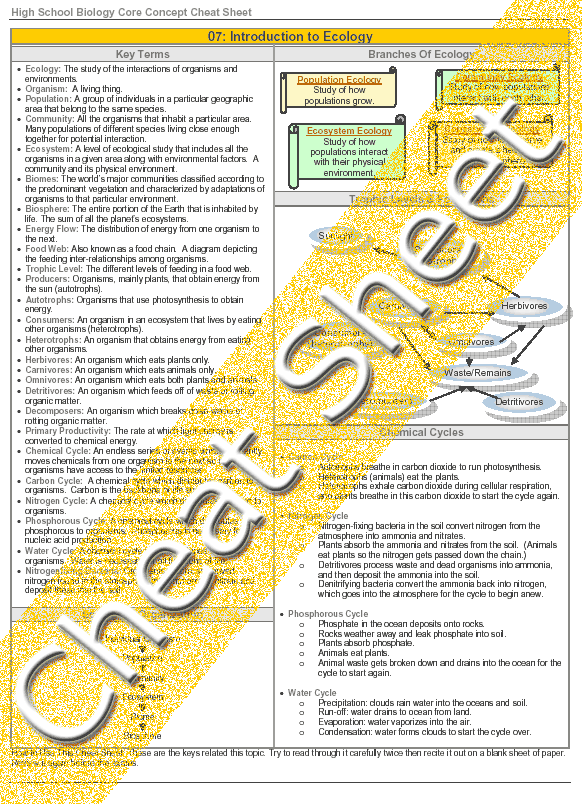
Ecology is the study of how organisms with their environments. It gives an idea of distribution and abundance of organisms. Biosphere is the entire portion of the earth which is inhabited by life. The environment of an organism can be divided into two: Abiotic and biotic environment. Abiotic factors include temperature, light, topography, pH, soil and water. Biotic factors include plants and animals. Ecological niche of a species refers to its lifestyle how it lives, what it does, how it interacts with other members of its ecosystem. The habitat is where the species is found.

Energy Flow I: Feeding Relationships
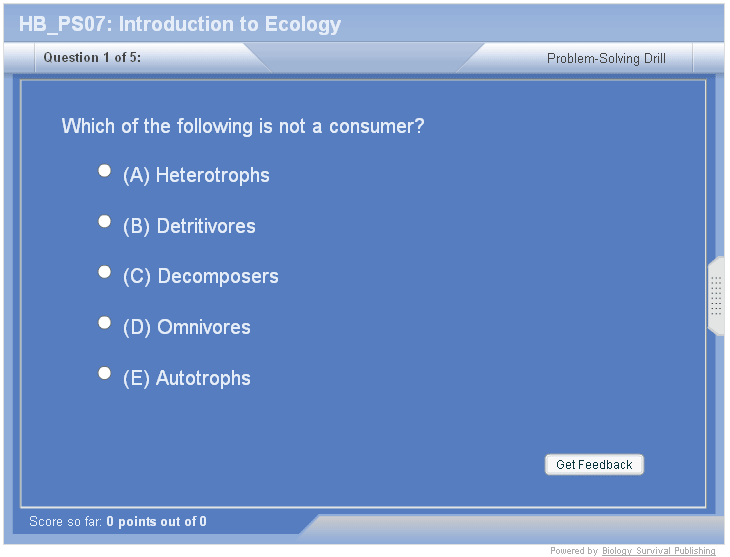
Energy flows through the biosphere in feeding relationships, when autotrophs get energy from the sun and consumers eat other organisms to gain that energy.  A food web is the complex interactions of the organisms on Earth.  The trophic levels include the producers, autotrophs, and the consumers, heterotrophs.

Energy Flow II: Chemical Cycles
Carbon, nitrogen, phosphorous, and water are limited resources which are needed for all life on Earth.  Chemical cycles distribute this energy through the biosphere.  Carbon is mainly cycled via consumers and plants.  Nitrogen is mainly cycled by bacteria in the soil. Water is cycled by the oceans and rain.  Phosphorous is cycled by runoff from sediment and rock deposits.


Rapid Study Kit for "Title":
Flash Movie Flash Game Flash Card
Core Concept Tutorial Problem Solving Drill Review Cheat Sheet

"Title" Tutorial Summary :

Ecology is the study of how organisms with their environments. It gives an idea of distribution and abundance of organisms. Biosphere is the entire portion of the earth which is inhabited by life. Biogeochemical cycles are the various nutrient circuits which involve both biotic and abiotic components of ecosystems. Three important chemical cycles are carbon, nitrogen and phosphorus cycles.


Tutorial Features:
  • General concept map of ecology is depicted
  • Flow charts of biotic and abiotic factors are shown
  • Concept maps of terrestrial biomes and aquatic communities are described
  • Pictorial description for each type of terrestrial biomes

"Title" Topic List:

Scope of Ecology

  • Introduction
  • Organization
  • Branches

Energy Flow I: Feeding Relationships

  • Definition
  • Food Webs
  • Trophic Levels

Energy Flow II: Chemical Cycles

  • Overview
  • Carbon Cycle
  • Nitrogen Cycle
  • Phosphorous Cycle
  • Water Cycle

See all 24 lessons in high school biology, including concept tutorials, problem drills and cheat sheets:  Teach Yourself High School Biology Visually in 24 Hours


© 2010 Rapid Learning Inc. All rights reserved         Disclaimer | Privacy Policy | Affiliates
BBBOnline Seal Company Rating
Credit Card Merchant Services

SSL Certificates